




How Women Turn Artisanal Fishing into Opportunities for Their Communities
The Other Key Players in Fishing:
How Women Turn Artisanal Fishing into Opportunities for Their Communities
Text: Liz Herrera
Photos courtesy of Dayani Rodríguez
At the market, a customer picks out a fish, asks the price, and completes the purchase in a matter of minutes. A transaction takes place; the fish leaves the sea and ends up on the plate. But behind every fish are hours of work to clean, preserve, transport, and find the right buyer—a process in which women play an important, though often unseen, role.
Behind every fish fillet, every seafood product we consume, there is a vast human story. A story that also speaks to the Mesoamerican Reef System (MRS), because the way fish reach the markets is directly linked to the livelihoods of coastal communities and to reef conservation.
For Dayani Rodríguez, a native of the village of Barra del Motagua in Omoa, Honduras, fishing is part of her family history. From childhood, she learned from her father the various tasks involved in this activity.
“I’ve been fishing since I was 12 years old… my father was a fisherman, and he taught us how to clean fish, refrigerate them, and sell them. For as long as I can remember, we’ve been selling fish products.”
Today, Dayani is one of eight women in her community who work at Pescadería La Bendición, a business that has been operating for nearly three years. Her experience reflects a reality that remains largely unseen: the fisheries value chain neither begins nor ends on the boat. After the catch is unloaded, there is an extensive network of activities that determines how much economic value each catch can generate and how much of that value remains in the community.
That is the premise behind Women for the MAR, a project implemented by the Mesoamerican Reef Fund (MAR Fund) that supports women-led enterprises. It has helped nearly one hundred women strengthen their technical skills, develop financial autonomy, and recognize their role as key players in their respective ventures, while also fostering confidence, leadership, and the creation of support networks among them.
The initiative is based on a simple principle: conservation can also create opportunities for people. From the perspective of the blue and regenerative economy, protecting the reef means strengthening economic activities that depend on its health, diversifying sources of income, and creating incentives so that communities can thrive without increasing pressure on resources.
In artisanal fishing, generating greater value does not necessarily mean extracting more from the sea, but rather making better use of what is already caught. This involves promoting responsible practices and strengthening communities’ capacities to manage, conserve, and market their products sustainably.
La Bendición Fish Market is part of the fishermen’s associations supported by the Center for Marine Studies (CEM), which trains them to fish in a more organized, responsible, and sustainable manner. With support from MAR Fund, this approach is also being promoted among women’s groups involved in the fisheries value chain, as in Dayani’s case.
The CEM supports the strengthening of enterprises that can contribute to the sustainability of the SAM by respecting minimum catch sizes, closed seasons, the use of permitted fishing gear, and ensuring the traceability of products from authorized areas.
It also promotes appropriate methods for catching species such as lobster and actions such as the collection of solid waste found in the sea. In this way, those who depend on fishing also contribute to the care of the ecosystem that sustains their activity and their livelihoods.
“Transforming this reality requires supporting women in processes of reflection and recognition of their contributions, while also working with families, communities, and institutions to challenge the beliefs and practices that perpetuate these inequalities,” states Mariana Borja, Women for SAM Officer at MAR Fund, explaining that the main challenge is not a lack of effort, will, or technical knowledge, but rather the structural barriers that keep women in the most vulnerable segment of the value chain.
“Artisanal fishing has historically been viewed as a man’s trade; however, in the SAM, it is women’s hands that sustain much of the community structure behind fishing. Even so, gender norms have contributed to rendering their work invisible and to perpetuating—even in the way they perceive their own contributions—an unequal valuation compared to men’s work.”
In rural coastal communities, this contribution has historically been overlooked. Although women participate in decisions that determine the economic value of fishing and the stability of family income, their work is often excluded from statistics, financing programs, and decision-making forums regarding the sector. While fishing activity is typically measured by catch volume, much of the economic value is generated after the catch is landed.
They are also part of communities that have spent generations observing the cycles of the moon, the behavior of the tides, and the migration patterns of different species. The key is to combine this ancestral knowledge with tools for managing and administering marine and coastal resources.
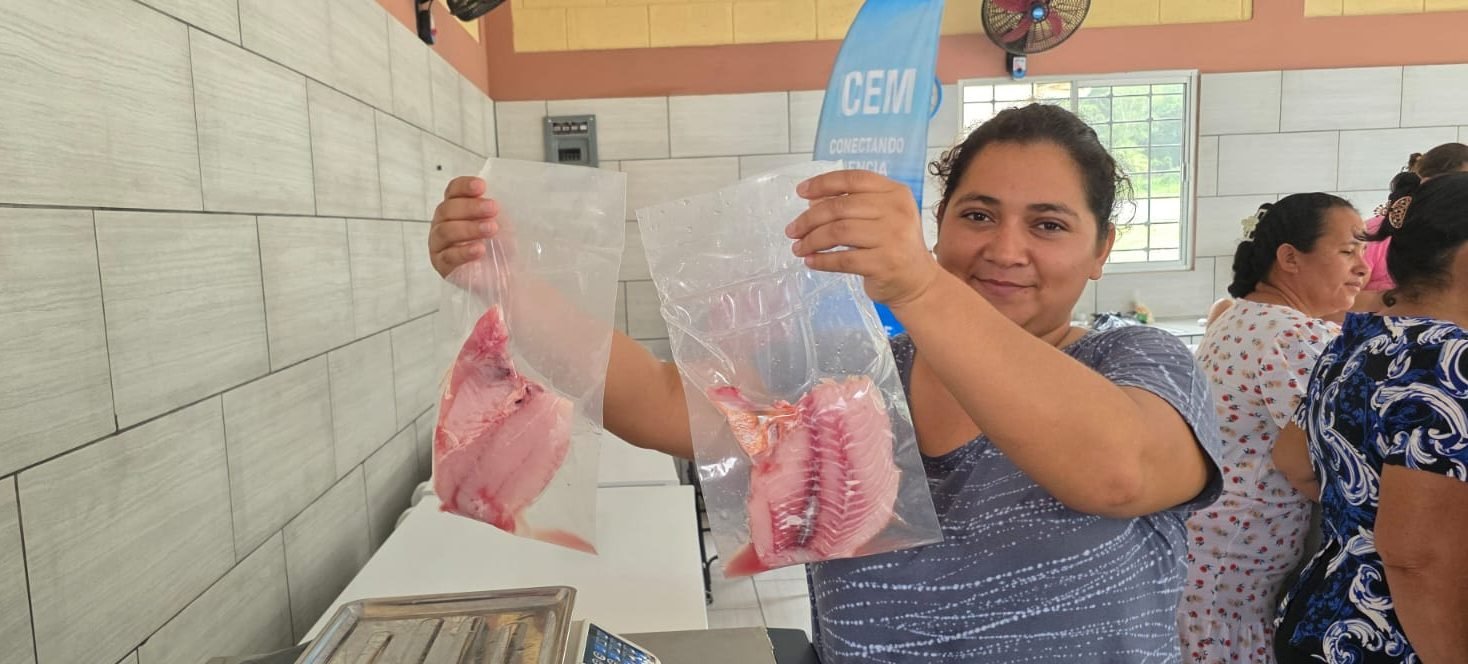
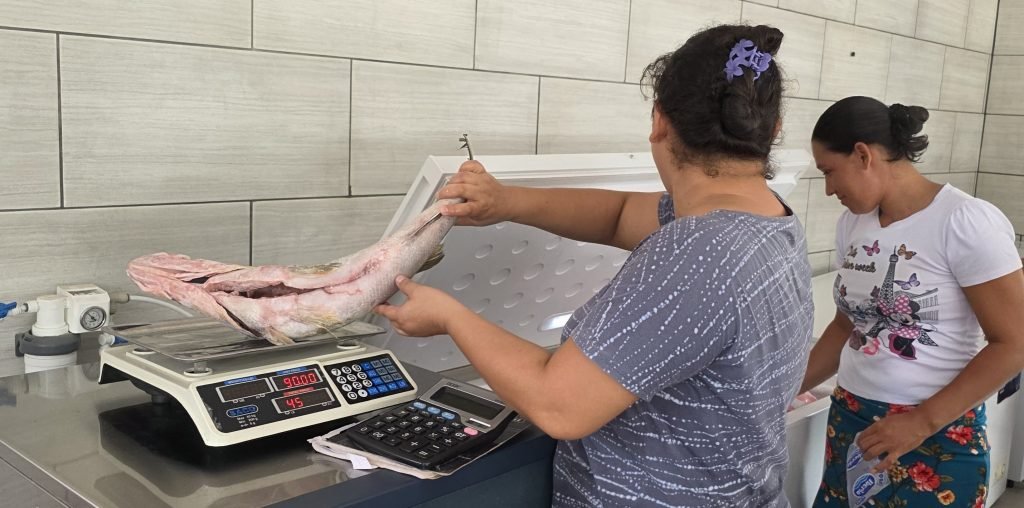
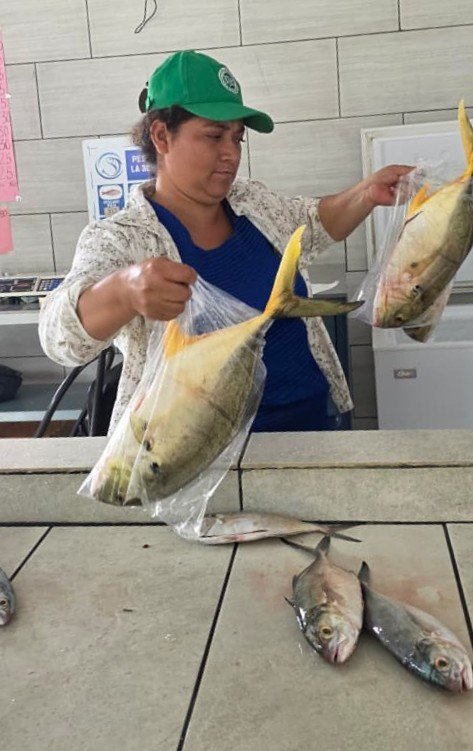
When the boat reaches the beach, the work has only just begun. They receive the catch, sort the species by size, clean the fish, and prepare it for sale. If a customer has already placed an order, they set aside the appropriate pieces. Before they had a freezer, time was against them: if the fish was still on the table by evening, they had to lower the price to avoid losing the entire catch. Today, they can keep the product in good condition for longer, process it, or wait for a buyer who will pay a fair price. Dayani knows firsthand what it means to sustain that part of the supply chain.
“We have to make the trip from the beach to the collection center, transporting the fish for nearly an hour. The work we do is hard and demanding, and we’d like to be valued as women.”
Added to this are limitations such as restricted access to credit, a shortage of infrastructure and basic services, a lack of electricity for refrigeration or processing the product, as well as the additional burden of domestic work and family care. In some cases, these conditions are exacerbated by gender-based violence, which further reduces women’s opportunities to participate in decision-making spaces.
“Women’s economic empowerment is not only a matter of social justice but also a key factor in strengthening environmental sustainability, the local economy, and the resilience of fishing communities,” Mariana emphasizes. From a Blue Economy perspective, when a woman gains access to better decision-making tools and financial autonomy, the impact is comprehensive: pressure on fishery resources is reduced by adding value rather than volume, food security is strengthened, and community resilience is increased.
 Some Intersectional Barriers Faced by Rural Women Entrepreneurs
Rural women entrepreneurs do not constitute a homogeneous group. The barriers they face can be exacerbated when factors such as geography, ethnicity or community affiliation, socioeconomic status, age, or disability intersect.
- Rural geography: limited access to basic services, connectivity, and transportation.
- Ethnic and community identity: membership in indigenous peoples, local communities, rural communities, peasant communities, and communities of African descent, with historical and structural inequalities.
- Social class: conditions of vulnerability and poverty that perpetuate cycles of exclusion.
- Digital gap: lack of digital literacy and limited access to technology.
- Financial services: limited access to banking services and formal credit.
For the women at La Bendición Fish Market, strengthening their business has also meant changing the way they sell their product and the value they can get for it. “Since we started our own business, we no longer have to deal with the hardships of haggling over the fish and seeing who will buy it. Now it’s transported from the boat to the collection center, refrigerated, and the customer comes there to buy it. The value chain for our fish has also improved, because we no longer give it away—instead, we set a fair price for the product.”
Women for the MAR seeks something deeper than simply providing equipment or offering isolated training sessions. Its goal is to strengthen women’s entrepreneurial skills, leadership, self-confidence, and collective organization so they can add value to their products, diversify their income, and negotiate on better terms. The support is grounded in their realities and aims to overcome the barriers that have historically limited their access to opportunities.
Although there are numerous programs aimed at women today, their requirements, methodologies, and support structures continue to exclude those who have faced historical exclusion and multiple barriers to access. Women for the MAR is committed to investing in these women and tailoring its support to their realities, because their livelihoods, knowledge, and daily work are closely linked to the conservation of marine and coastal ecosystems, placing them on the front lines of their protection.
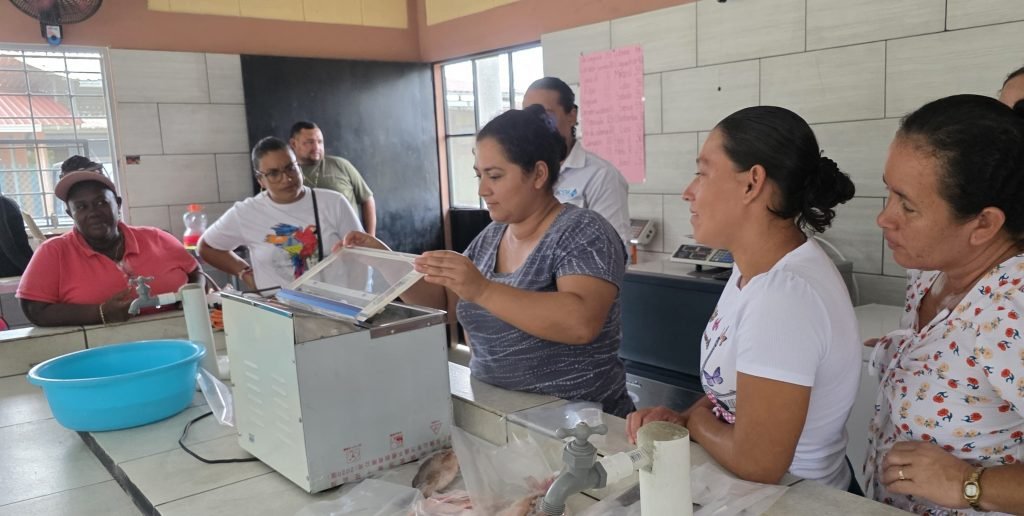
For Dayani and her colleagues, this process has also meant acquiring new skills to process and preserve their products.
“We’ve been learning skills that go beyond the basics, such as filleting, packaging, refrigeration, and proper handling. We’ve learned thanks to the support of various institutions that have been our partners in these ventures.”
This change has effects that extend beyond the family’s economy. When a woman has a more stable income and better conditions for marketing the product, she can reduce her reliance on immediate harvesting during closed seasons or periods of scarcity. Thus, economic empowerment can also become a conservation tool: generating more value without increasing the volume of harvest helps reduce pressure on resources and strengthens the resilience of communities.
“All of this has helped us empower ourselves and keep moving forward and fighting so that our business continues to grow, our fish are better cared for in our area, and fishing moratoriums are respected. All of that has helped us take care of the sea and our fish markets,” Dayani reiterates.
At this intersection of territory, gender, and sustainability, Women for the MAR puts forward a key idea: conservation also means creating conditions for communities to live better without compromising the future of the sea. And in this effort, coastal women are a fundamental part of the fisheries value chain—as bearers of knowledge, entrepreneurs, and key actors in strengthening local economies and promoting practices that contribute to the sustainability of marine resources.
Women for the MAR seeks to raise awareness of and strengthen women’s leadership in marine conservation within the Mesoamerican Reef System. Through networks, training, and advocacy initiatives, it promotes women’s equitable participation in natural resource management, recognizing their essential role in the sustainability of coastal communities.
Tags: Fisheries, Women, Women for the MAR