



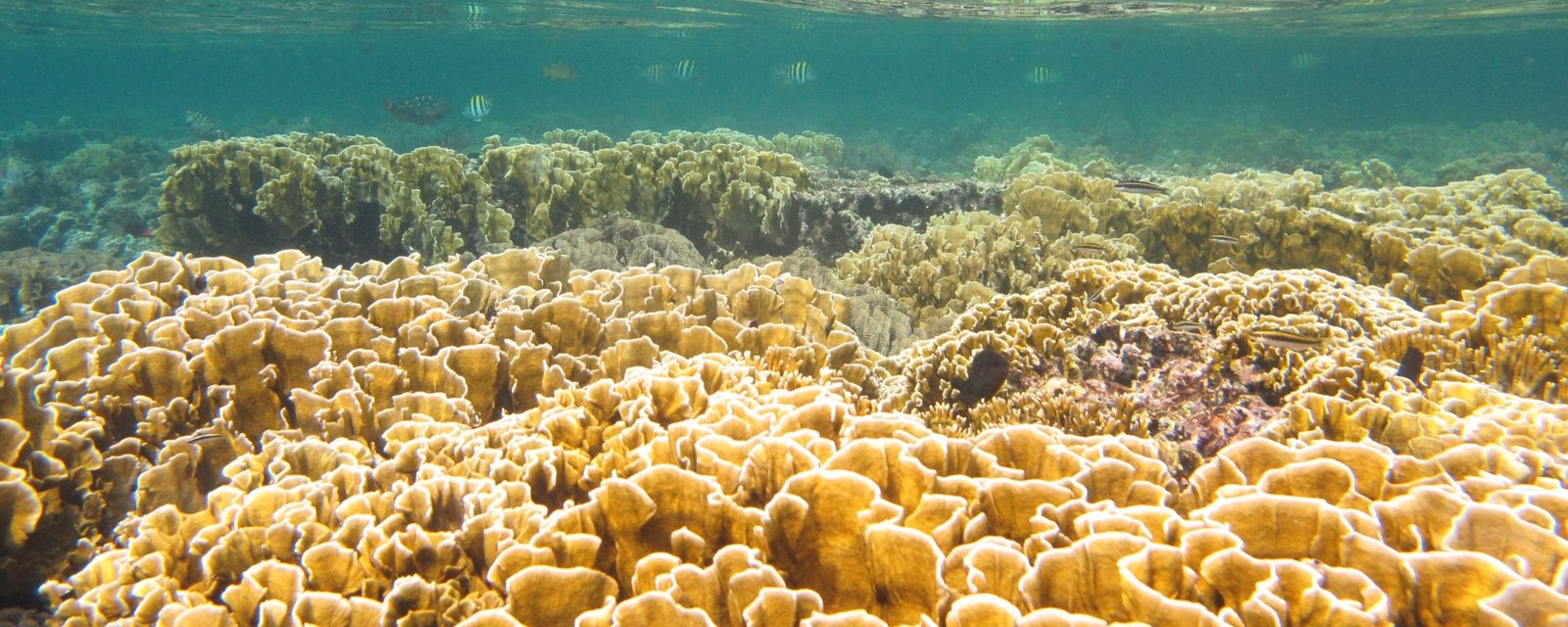
Foto: Elisa Areano
Thanks to the generous support of the German Government through KfW, recovering damaged and degraded coral reefs in the Mesoamerican Reef (MAR) region is now a tangible possibility through the Mesoamerican Reef Rescue Initiative (RRI).
Objective:
The overall objective of the Reef Rescue Initiative is to contribute to the conservation of the Mesoamerican Reef by increasing its resilience and recovery capacity. In doing so, the Initiative helps safeguard the environmental and cultural services the reef provides. This is pursued through:
- Capacity building
- Regulations
- Economic incentives
- Financial sustainability required for effective and timely restoration
Main approaches of the Initiative:
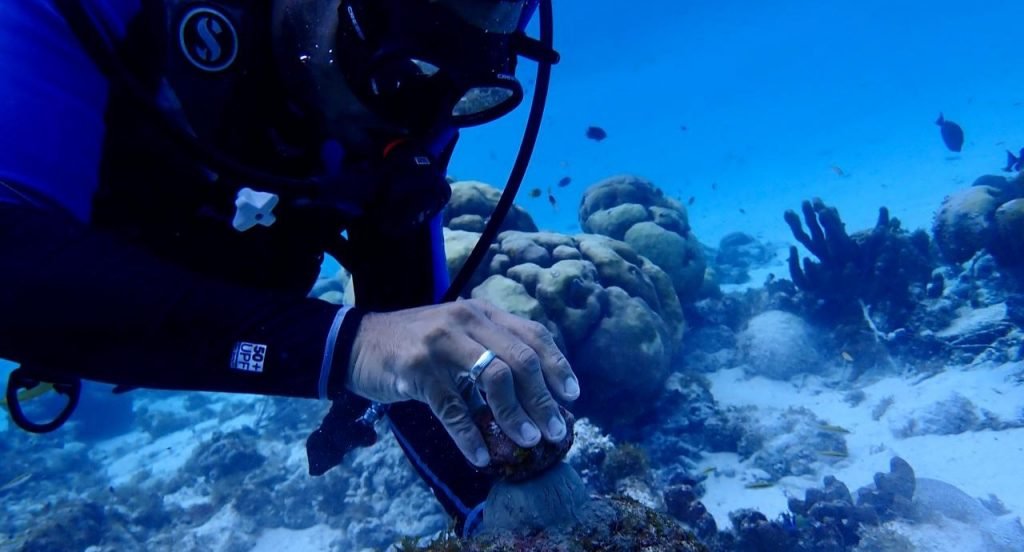
- Continuing restoration: Based on diverse coral restoration techniques applied in reef areas that have been degraded or damaged.
- Emergency response: Immediate response actions to recover reefs from hurricane impacts or possible ship groundings.
This innovative project is implemented by MAR Fund and the Central American Commission on Environment and Development (CCAD), with the participation of the four countries that share the reef system: Belize, Guatemala, Honduras, and Mexico.
Main RRI Projects
MAR Fund, through the Mesoamerican Reef Rescue Initiative (RRI), in coordination with Willis Towers Watson (WTW) and with the collaboration of regional, national, and local authorities from the MAR countries, designed and implements the parametric insurance program for the Mesoamerican Reef —The MAR Insurance Programme.
This pioneering program provides a cost-effective reef insurance scheme to cover hurricane risk in the MAR region, thereby strengthening the resilience of local communities and beneficiaries who depend on the reef for their livelihoods, food security, and protection against natural disasters.
As an innovative financial mechanism, the MAR Insurance Programme ensures a post-storm response framework for coastal communities that rely on the reef.
The program began in 2021 with coverage for four pilot sites (two in Mexico and two in Belize). The model expanded steadily in 2022, 2023, 2024, and 2025, and currently eleven (11) sites are covered across the MAR region.
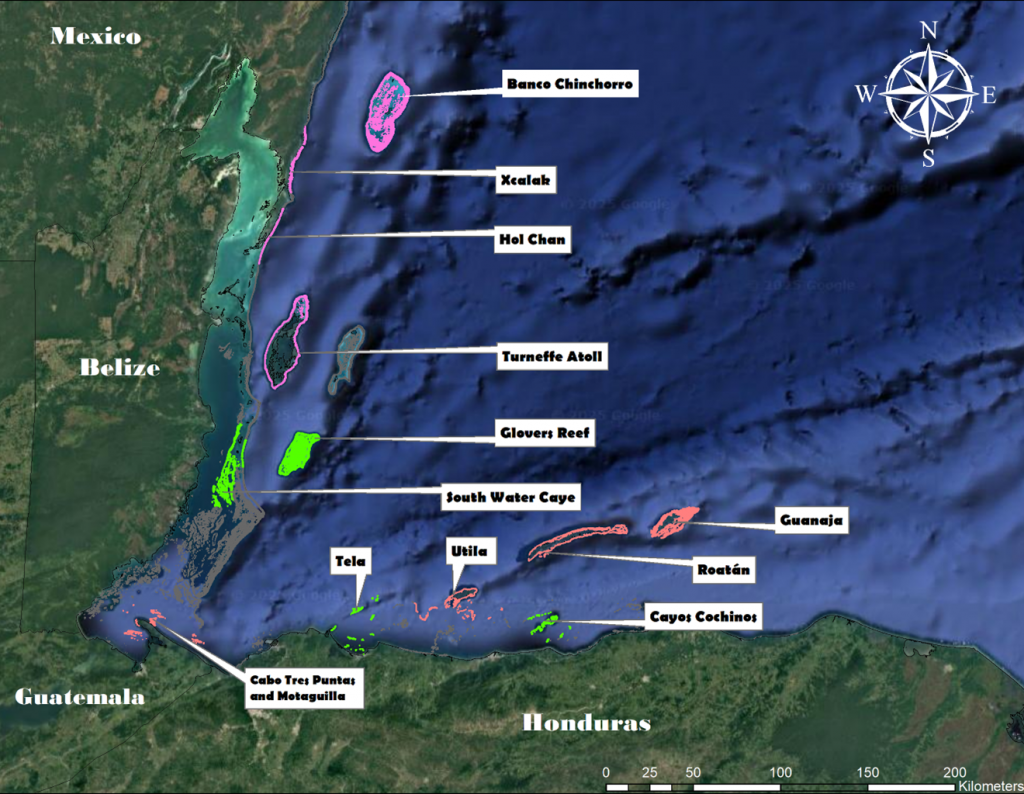
Image shows the sites covered by the MAR Insurance Programme.
Development of a submission to designate Particularly Sensitive Sea Areas in the Mesoamerican Reef Region:
Since 2020, MAR Fund, through the RRI, has been leading a project to analyze the processes required by the International Maritime Organization (IMO) to propose the MAR region as a Particularly Sensitive Sea Area (PSSA).
A preliminary technical proposal was developed with input from the Technical Supervisory Committee (TSC), governmental authorities, and regional partners, including an assessment of current shipping routes overlaid with reef sites.
Currently, in 2025, MAR Fund, with the support of PROCARIBE+, has received a grant to further advance this proposal. The process is underway with updated technical inputs, regional consultations, and continuous communications with the IMO.
The ultimate objective is to achieve international recognition of the Mesoamerican Reef as a PSSA, ensuring stronger and long-term protection of the reef against maritime threats.
In 2021, MAR Fund began strengthening governance and building response capacities for the immediate attention of coral reefs impacted by hurricanes in the Mesoamerican Reef (MAR) region.
These capacities have been developed in collaboration with The Nature Conservancy (TNC) and with the support of national authorities in charge of environment, biodiversity, and natural resources, including those responsible for managing protected areas and reef sites in the four MAR countries. The contribution of our donors has also been essential to achieving these results.
Currently, seven Post-Storm Reef Response Coordinating Committees have been created, trained, and formally established:
-
One in Mexico
-
Two in Belize
-
Three in Honduras
-
One in Guatemala
Each Committee has developed its own Post-Storm Response Plan, tailored to the specific needs of its site.
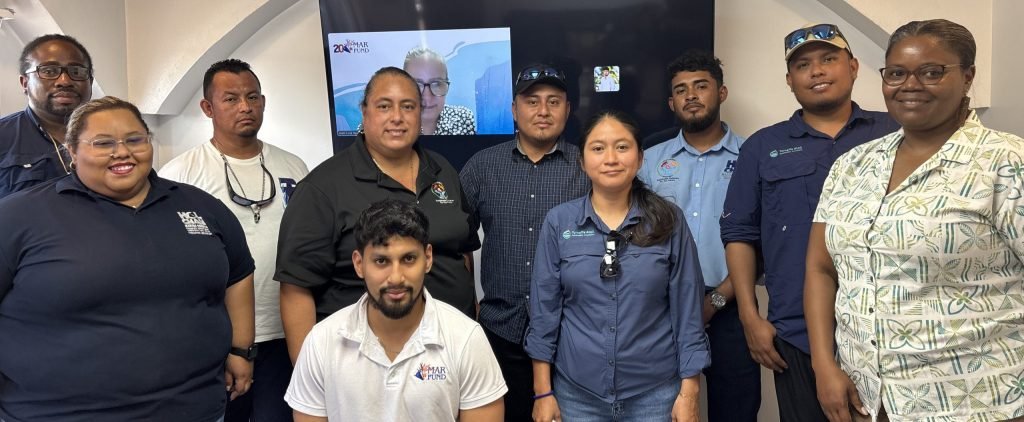
In addition, 20 Reef Response Brigades have been formed, with a total of 209 brigade members, including 28 trained and certified brigade trainers.
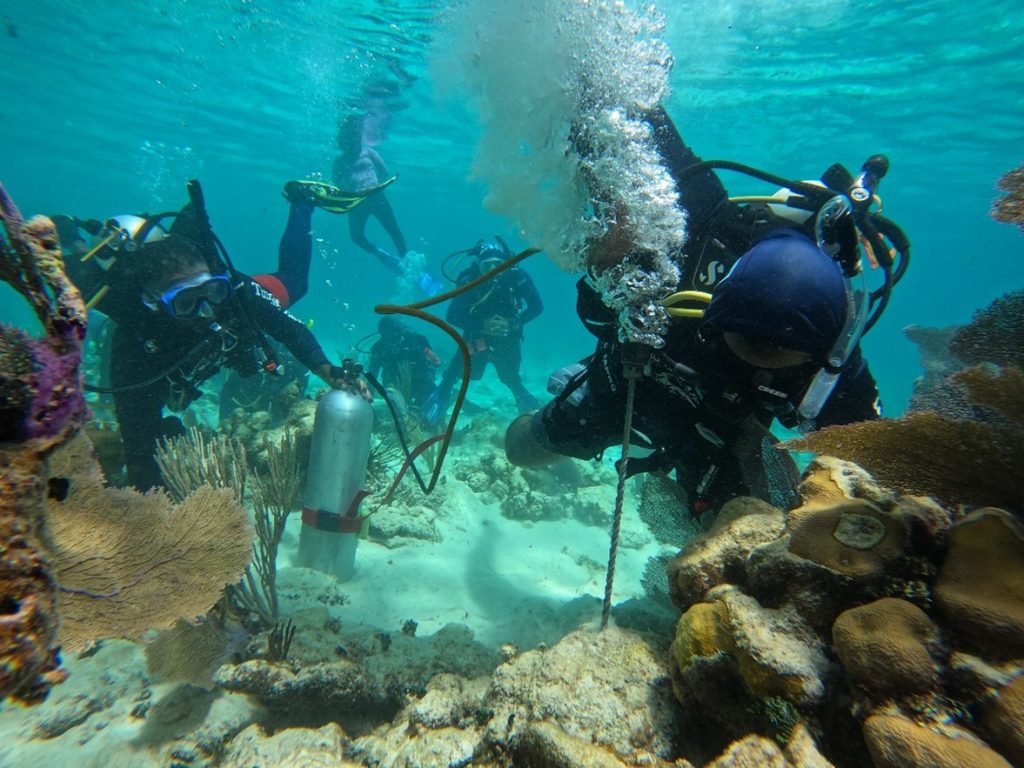
Practical training of the Reef Response Brigades.
Photo: TASA
The Reef Rescue Initiative (RRI), through its strategy of capacity building and support for restoration science, provides funding to local organizations to implement small-scale projects that increase coral cover and enhance the resilience of coral reefs in the Mesoamerican Reef (MAR). Between 2017 and 2024, the Mesoamerican Reef Fund (MAR Fund), through the RRI, supported 16 small projects dedicated to strengthening coral reef conservation and restoration across the MAR region.
-
A total of 13 projects were funded directly by the RRI, benefiting nine organizations in:
-
Mexico (4)
-
Belize (3)
-
Honduras (2)
-
These projects focused on capacity building, coral restoration, and addressing stony coral tissue loss disease (SCTLD).
In 2020, an additional three projects were implemented with funding from the Integrated Watershed-to-Reef Management Project of the Mesoamerican Reef Ecoregion (MAR2R/CCAD/GEF/WWF).
Collectively, these efforts represent an investment of USD 422,782, of which USD 337,782 was contributed by the RRI and USD 85,000 by MAR2R/CCAD.
Created in 2017, the Emergency Fund was established to provide immediate and timely financing to support the restoration and rescue of coral reefs impacted by natural disasters such as hurricanes and storms, or by anthropogenic actions such as vessel groundings.
Through this fund, MAR Fund strengthens the resilience of the Mesoamerican Reef (MAR) by assisting countries in coordinating reef response and rescue teams across the region.
Additionally, the Emergency Fund is the official mechanism through which MAR Fund receives and channels payments from the parametric insurance to the affected sites whenever the coverage is triggered.
Click here to access the documents to apply to the Emergency Fund.
Key Indicators
(in 2024)
Project Information
1) Technical Supervisory Committee
2) Initiative Coordination Unit
Click on the buttons to open the collapsible content.
a) Legal Analysis Reef Restoration MAR Region
b) Recommendations to Improve legislation MAR Region
c) Legal Analysis Reef Restoration MAR-Presentation
d) Additional Questions and Answers
a) Systematization Legal Analysis MAR
a) CSI Analysis. MAR Procedures
b) CSI Analysis MAR Recommendations
a) Action for implementing Regional Protocols
a) Regional Opportunities to enable Restoration
a) Public Policy Analysis for the MAR-Technical Document
b) Public Policy Analysis for MAR Summary-Presentation
c) Climate Risk Assessment-Concept Note-Document
d) Climate Risk Assessment-Summary-Presentation
a) Belize
b) Guatemala
c) Honduras
d) Mexico
e) Regional
f) Policy Brief Regional
g) Belize - Policy Brief English
a) GIS Analysis for the MAR Region
a) Reef Restoration Guide
b) Reef Restoration Guide Video
i) Mesoamerican Reef System
ii) Introduction to Coral Reef Restoration
iii) Asexual Coral Breeding Technique
iv) Assisted Coral Reproduction Technique
v) Advice from experts
c) Short videos: interviews with experts in restoration of the MAR
i) Adriel-Castañeda
Fisheries Department Belize
Belize
ii) Ana Giro
Healthy Reefs for Healthy People Initiative
Guatemala
iii) Anastazia Banasak
Laboratorio de Investigación Integral para la
Conservación de Arrecifes CORALIUM
México
iv) Christian Alva
Proyecto Resiliencia
GEF-PNUD-CONANP
México
v) Claudia Padilla
Instituto Nacional de Pesca - INAPESCA
México
vi) Gabriela Nava
Oceanus A.C.
México
vii) Héctor Lizárraga y Baruch Figueroa
Centro Ecológico Akumal
México
viii) Ian Drysdale
Healthy Reefs for Healthy People Initiative
Honduras
ix) Lisa Carne
Fragments of Hope
Belize
x) Marcio Aronne
Fundación Cayos Cochinos
Honduras
xi) Miguel García
Oceanus A.C.
México
xii) Tripp Funderburk
Bay Islands Reef Restoration
Honduras
a) Economic Valuation MAR Region English
b) Valoración Económica Región SAM
Emergency Response and Protocols
1) Mesoamerican Reef Insurance Programme
2) Brief MAR Insurance Programme Q&A
3) Brief MAR Insurance Programme Q&A – Español
4) ORRAA Solutions Lab: MAR Insurance Programme
5) Financing Mesoamerican Reef Resilience to Extreme Climatic Events
6) Financing Mesoamerican Reef Resilience to Extreme Climatic Events
7) Study 1 Correlation Damages and Parameters
a) Study 1. Correlation Damages and Parameters – Technical Document
b) Study 1. Damages and Parameters – Presentation
c) Study 1. Correlation Damages and Parameters – Executive Summary
8) Study 2 Cost Analysis Response Estimation
a) Study 2. Cost Estimation – Technical Document
b) Study 2. Cost Estimation – Summary and Presentation
9) Feasability of the insurance
a) Beneficiary Analysis for the MAR
i) Beneficiaries of Rapid Response Reef Risk Financing in the MAR Region
ii) Cost-Benefit Summary and Sensitivity Analysis
iii) Supplementary Report-InsuResilience Target Group
b) Financial Risk Anlysis for the MAR
i) Sustainability of Rapid Response Reef Risk Financing in the MAR Region
10) Brief MAR Insurance Programme Q&A-2024
MAR Insurance Brief 2024
MAR Insurance Brief 2024 – Español
1) Emergency Fund Guidelines- English
2) Lineamientos Fondo de Emergencia- Español
 3) Emergency Fund proposal template – English
4) Fondo de Emergencia- formato para propuesta- Español
5) Emergency Fund- Summary
6) Fondo de Emergencia -Resumen
1) Early Warning Emergency Response Protocol
2) Protocolo de Alerta Temprana y Respuesta inmediata
3) Emergency response protocol for ship groundings
1) Field Guide for Monitoring Coral Disease Outbreaks in the Mesoamerican Region
2) Guía de campo para Monitorear los Brotes de Enfermedades de Coral en la Región Mesoamericana
3) SCTLD Recommendations Final 2020
Collaboration and Platforms
1) Reef Restoration Network
a) Learn more about the Network in Coralmar.org
b) Meeting Minutes
c) Strategic Plan
d) Regulatory Statutes
2) SCTLD Regional Dialogue Group
Regional Strategic Workshop: Building Resilience and Addressing Risk in the Mesoamerican Reef
1) Agenda
Agenda – Regional Strategic Workshop 2021
2) Event Charter
Event Charter – Building Resilience and Addressing Risk in the Mesoamerican Reef
3) Press Release
Press Release – Regional Strategic Workshop
4) Minutes
Regional Workshop Minutes MAR2R Español
5) Audio/video
Día 1 – Taller Estratégico Regional “La Generación de resiliencia y atención al riesgo en el SAM”
Día 2 – Taller Estratégico Regional “La Generación de resiliencia y atención al riesgo en el SAM”
6) Speakers Presentations
a) Iniciativa de Rescate de Arrecifes
Claudia Ruiz
MAR Fund
b) Valoración económica de los arrecifes de coral en el SAM y los bienes y servicios que proporcionan
Itziar Ruiz Gauna
Metroeconómica – WRI México – The Ocean Foundation
c) Financial Sustainability for the recovery and resilience of the Mesoamerican Reef
Innovative financial mechanisms to manage risk and build resilience in reef systems
and their dependent populations
Simon Young
CCAD-MAR Regional Strategic Workshop
d) Sinergias y coordinación con otros proyectos, estrategias, planes e iniciativas regionales
bajo el marco de la ERAM/ERCA
Carlos Rodríguez Olivet
Especialista Marino Costero y Salvaguardas Proyecto MAR2R-CCAD/GEF-WWF
e) Estrategias e instrumentos de políticas públicas orientadas a la atención al riesgo y
a la generación de resiliencia del SAM
José Luis Funes Izaguirre
Instructor de Brigadas de Respuesta
f) Gobernanza y participación local en la resiliencia y riesgo en arrecifes.
Atención a la respuesta para arrecifes
Biol. Juan Carlos Huitrón Baca
Instructor de Brigadas de Respuesta
g) Mi experiencia como brigadista, la importancia de atender el arrecife después de un impacto
María del Carmen García Rivas
Directora Parque Nacional Arrecife de Puerto Morelos
México
h) Observatorio Ambiental Regional (OAR)
Mario Escobedo
CCAD – SICA
i) Análisis de Diagnóstico Transfronterizo y Plan de Acciones Estratégicas
Julieta Castillo
j) Estrategia Regional para el Crecimiento Azul en los países del SICA
Organización del Sector Pesquero y Acuícola del Istmo Centroamericano
OSPESCA
k) Estrategia Regional Ambiental (ERAM) 2021-2025
CCDA – SICA
l) Mejorar nuestra comprensión del riesgo y la resiliencia de los arrecifes de coral mediante el
intercambio de información y avances de la colaboración entre HRI y AGRRA.
Ana Giró – Healthy Reefs Initiative
Patricia Kramer – AGRRA
m) Política Fiscal y ODS
Alfredo Ibrahim Flores Sarria
Secretario Ejecutivo del COSEFIN
Virtual Regional Workshop for the Exchange of Experiences in Post-Storm Response Capacity to Mitigate the Impact of Hurricanes on Coral Reefs
1) Minutes
a) Meeting Minutes English
b) Memoria Reunión Español
Resources and Communication
1) Insurance Model for Reefs
2) Emergency Response
3) Parametric Insurance in the Mesoamerican Reef
4) Post-Storm Reef Response Capacities in the MAR (English)
5) Capacidades de Respuesta Post Tormenta para arrecifes en la SAM (Español)
1) Geoserver MAR Fund data base
 a) Public access (password required)
b) Private access (password required)
c) Reef restoration projects
d) RRI Small Grants Projects
Videos
|
1) Innovative risk financing approaches to enhance ecosystem resilience along the Caribbean’s coastline – Long version
|
2) Innovative risk financing approaches to enhance ecosystem resilience along the Caribbean’s coastline – Short version
|
3) Reef resilience in the Greater Caribbean – Long Version
|
4) Reef resilience in the Greater Caribbean – Short Version
|
|
5) Fortalecimiento capacidades de respuesta post tormenta en el SAM
|
6) Curso Brigadas para Reparar Daños Causados por Huracanes en Arrecifes
|
7) Reef Response-Local Participation
|
8) Seguro Paramétrico y Protocolo de Respuesta Inmediata
|
|
9) Beneficios del Sistema Arrecifal Mesoamericano (SAM) y sus amenazas
|
10) Brigadistas de respuesta a emergencias
|
11) Hol Chan Marine Reserve
|
12) Iniciativa Wave of Change
|
|
13) Importancia de los Arrecifes Saludables
|
14) Inter Institutional Coordination for Protection of MAR
|
15) Restauración de arrecifes coralinos
|
16) Servicios Ambientales de los Arrecifes de Coral
|
News and Publications
Para más información:
Claudia Ruiz
Coordinadora de la Iniciativa de Rescate de Arrecifes.
cruiz@marfund.org